
☰
☰
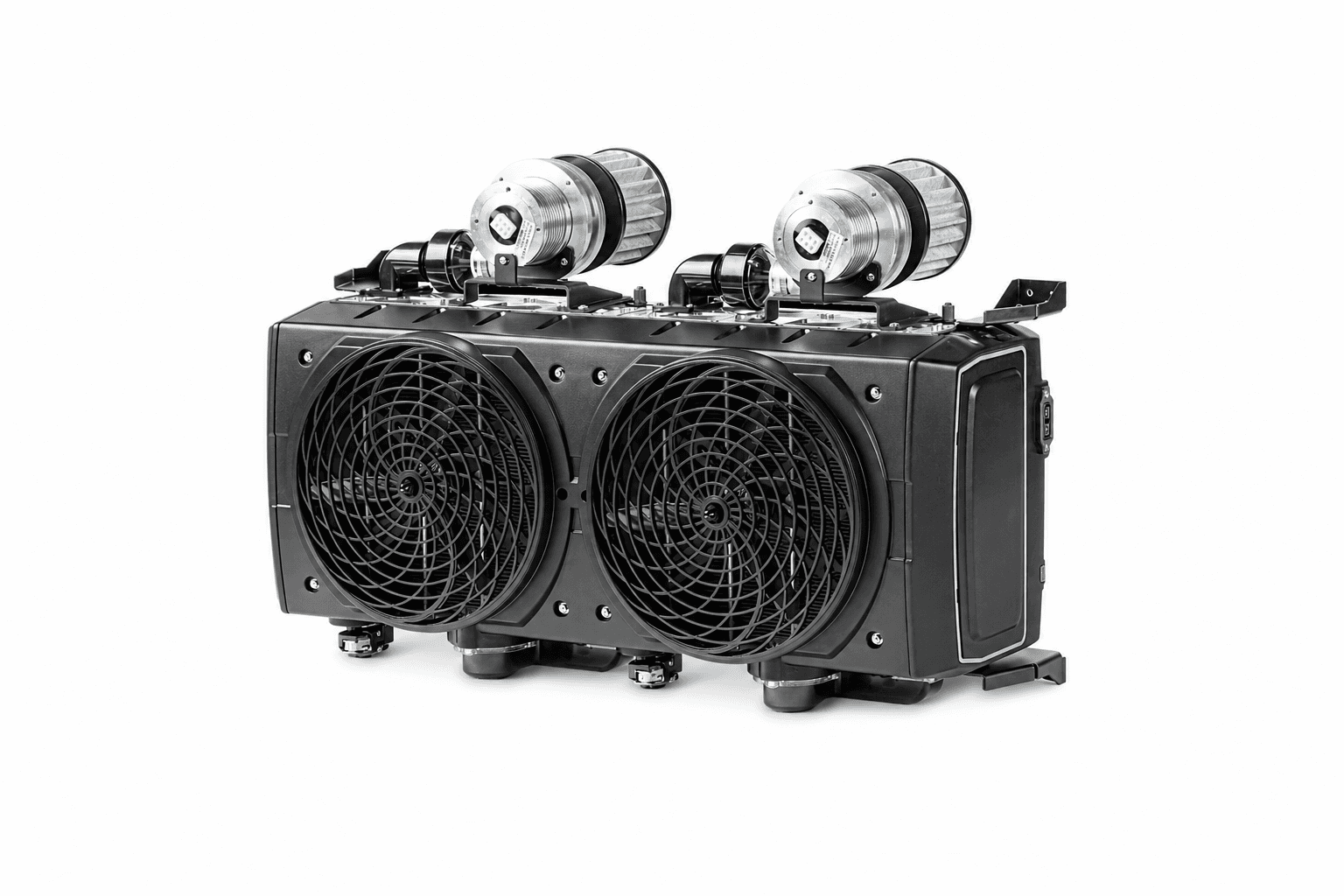
TerraLIX has announced that its closed-cathode air-cooled hydrogen fuel cell platform has been engineered to deliver stable power output under two of the most demanding environmental conditions in unmanned aviation: high-altitude operation up to 6,000 meters and extreme cold down to –35 °C.
As long-endurance UAVs increasingly operate at altitudes above 3,000 meters — where air density drops sharply and ambient temperatures fall well below freezing — conventional open-cathode fuel cells have struggled to maintain rated performance.
TerraLIX's closed-cathode architecture, combined with active air management and thermal recirculation strategies, is designed to overcome these structural limitations and establish a new performance standard for air-cooled fuel cell systems.
TerraLIX has announced that its closed-cathode air-cooled hydrogen fuel cell platform has been engineered to deliver stable power output under two of the most demanding environmental conditions in unmanned aviation: high-altitude operation up to 6,000 meters and extreme cold down to –35 °C.
As long-endurance UAVs increasingly operate at altitudes above 3,000 meters — where air density drops sharply and ambient temperatures fall well below freezing — conventional open-cathode fuel cells have struggled to maintain rated performance.
TerraLIX's closed-cathode architecture, combined with active air management and thermal recirculation strategies, is designed to overcome these structural limitations and establish a new performance standard for air-cooled fuel cell systems.
TerraLIX has announced that its closed-cathode air-cooled hydrogen fuel cell platform has been engineered to deliver stable power output under two of the most demanding environmental conditions in unmanned aviation: high-altitude operation up to 6,000 meters and extreme cold down to –35 °C.
As long-endurance UAVs increasingly operate at altitudes above 3,000 meters — where air density drops sharply and ambient temperatures fall well below freezing — conventional open-cathode fuel cells have struggled to maintain rated performance.
TerraLIX's closed-cathode architecture, combined with active air management and thermal recirculation strategies, is designed to overcome these structural limitations and establish a new performance standard for air-cooled fuel cell systems.
At sea level, atmospheric pressure is approximately 101 kPa with an air density of around 1.225 kg/m³. As altitude increases, both values decline significantly:
At 3,000 m, atmospheric pressure drops to approximately 70 kPa, and air density falls to roughly 0.91 kg/m³ — about 74% of sea-level density. At 6,000 m, atmospheric pressure decreases to approximately 47 kPa, with air density at around 0.66 kg/m³ — only about 54% of sea-level density.
This thinning of the air directly affects the oxygen partial pressure available at the cathode. For conventional open-cathode fuel cells, which rely on passive or low-pressure airflow, this translates into severe oxygen starvation at the catalyst layer. Field experience with open-cathode systems has shown power output dropping by approximately 50% at 6,000 m — a level of degradation incompatible with mission-critical UAV operations.
At sea level, atmospheric pressure is approximately 101 kPa with an air density of around 1.225 kg/m³. As altitude increases, both values decline significantly:
At 3,000 m, atmospheric pressure drops to approximately 70 kPa, and air density falls to roughly 0.91 kg/m³ — about 74% of sea-level density. At 6,000 m, atmospheric pressure decreases to approximately 47 kPa, with air density at around 0.66 kg/m³ — only about 54% of sea-level density.
This thinning of the air directly affects the oxygen partial pressure available at the cathode. For conventional open-cathode fuel cells, which rely on passive or low-pressure airflow, this translates into severe oxygen starvation at the catalyst layer. Field experience with open-cathode systems has shown power output dropping by approximately 50% at 6,000 m — a level of degradation incompatible with mission-critical UAV operations.
At sea level, atmospheric pressure is approximately 101 kPa with an air density of around 1.225 kg/m³. As altitude increases, both values decline significantly:
At 3,000 m, atmospheric pressure drops to approximately 70 kPa, and air density falls to roughly 0.91 kg/m³ — about 74% of sea-level density. At 6,000 m, atmospheric pressure decreases to approximately 47 kPa, with air density at around 0.66 kg/m³ — only about 54% of sea-level density.
This thinning of the air directly affects the oxygen partial pressure available at the cathode. For conventional open-cathode fuel cells, which rely on passive or low-pressure airflow, this translates into severe oxygen starvation at the catalyst layer. Field experience with open-cathode systems has shown power output dropping by approximately 50% at 6,000 m — a level of degradation incompatible with mission-critical UAV operations.
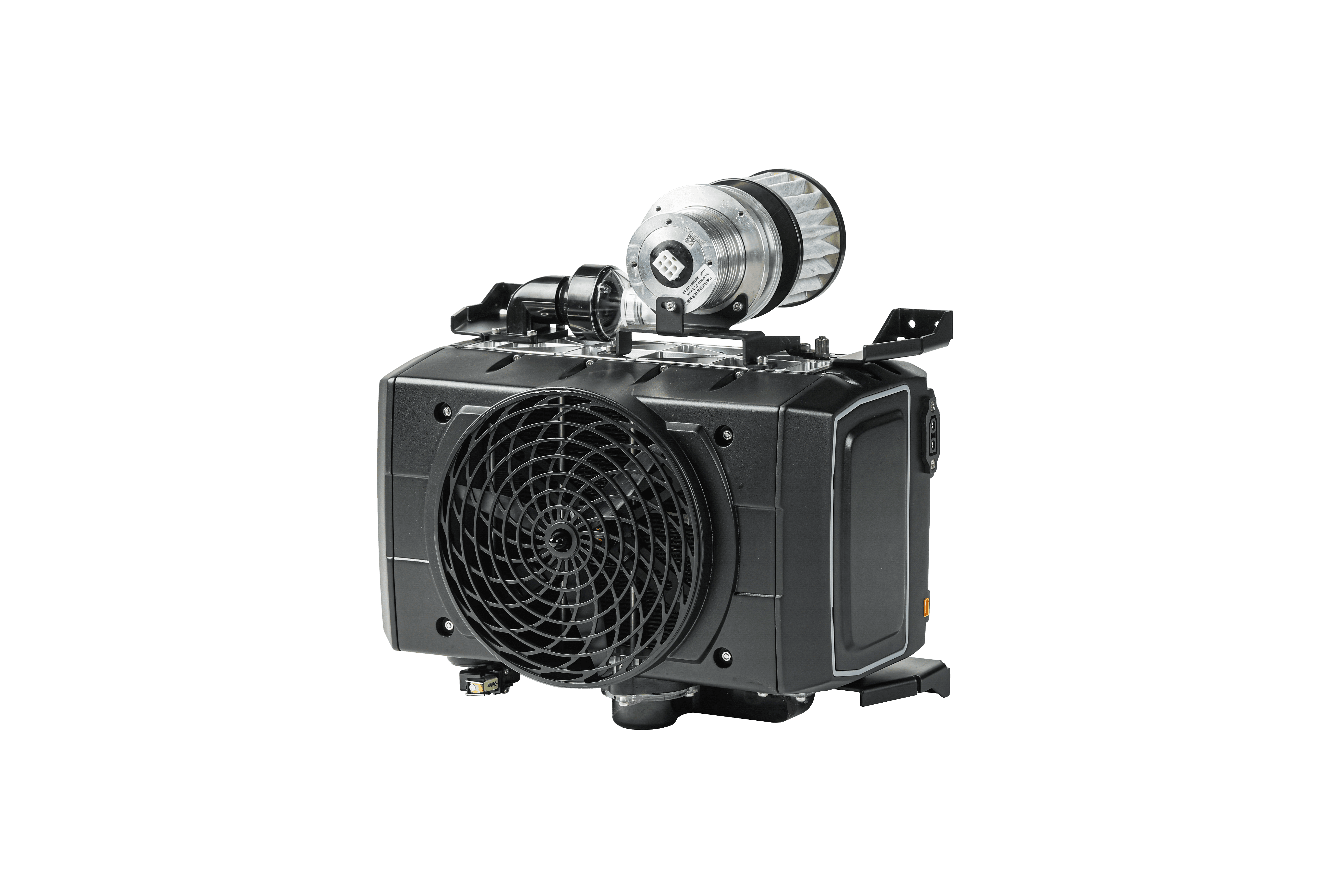
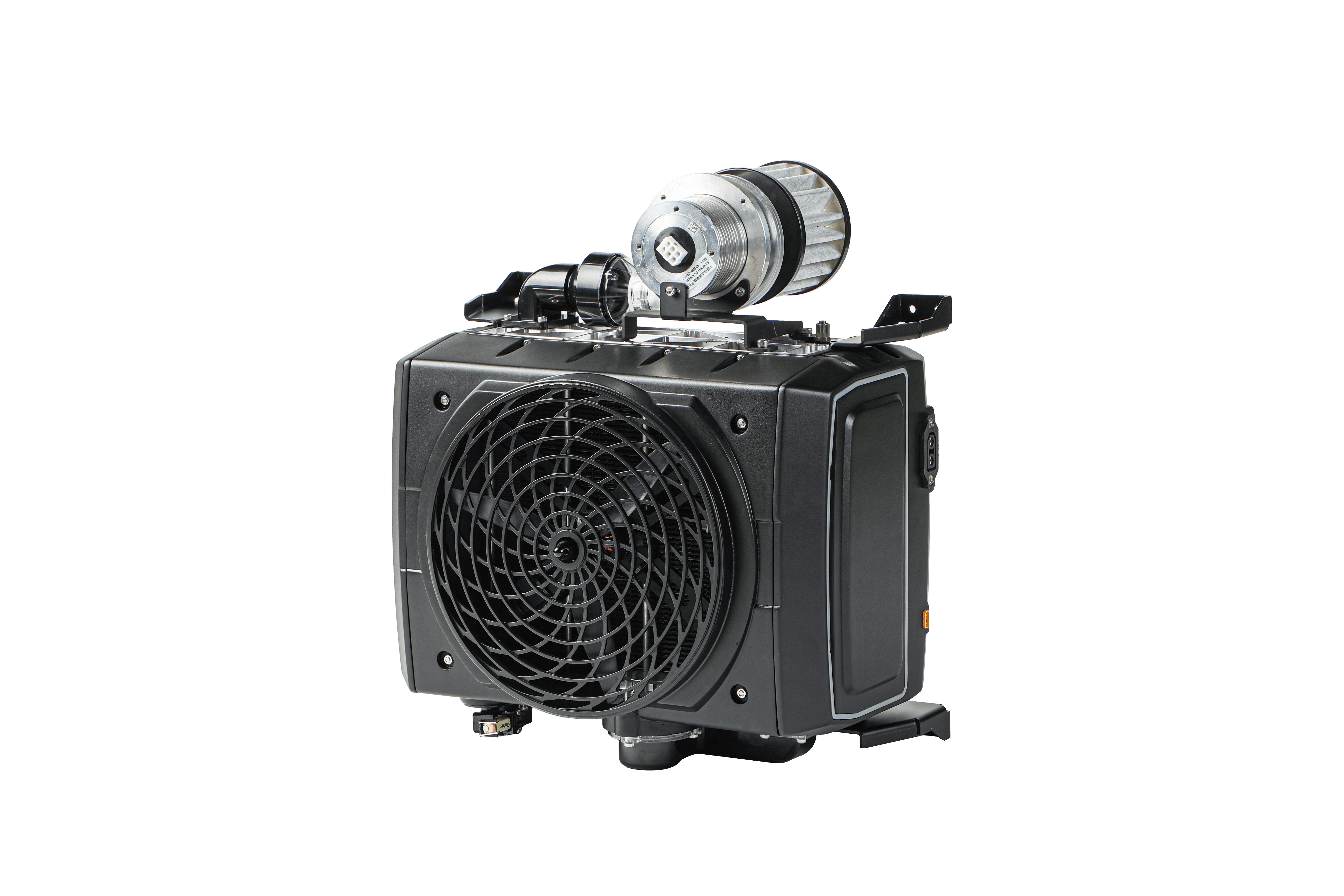
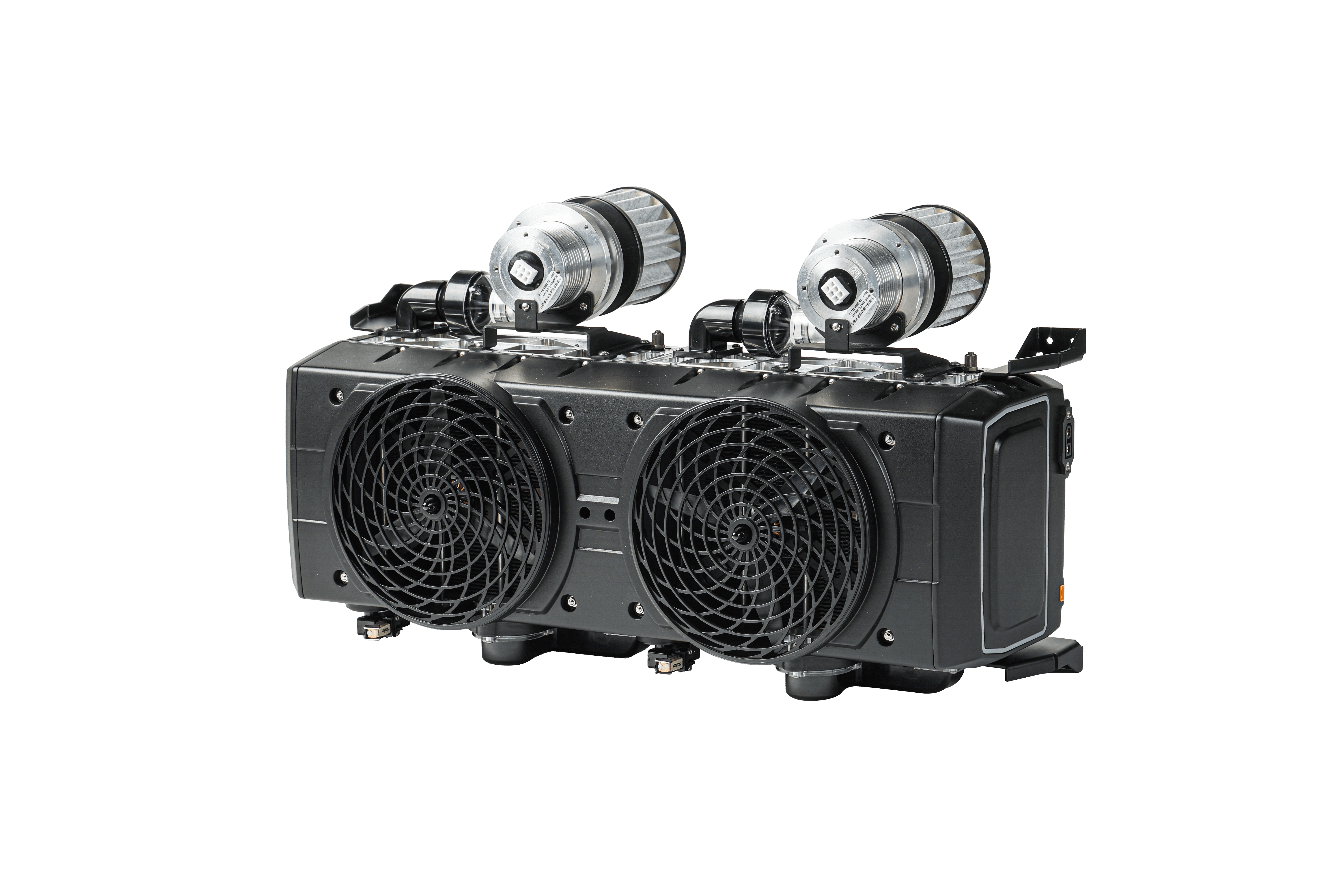
TerraLIX's HYCUS platform addresses high-altitude performance through three coordinated design principles.
Oversized Air Stoichiometry. The system supplies reaction air at 3 to 4 times the theoretical electrochemical requirement — typically 120 to 150 LPM at rated output, scaling up to 200 LPM at peak. This deliberate excess provides a substantial oxygen reserve, ensuring that even when ambient air density drops by nearly half at 6,000 m, sufficient oxygen molecules continue to reach the catalyst layer.
Active Blower-Driven Air Supply. Rather than relying on passive convection, the closed-cathode design integrates an active blower capable of generating 15 to 30 kPa of static pressure. This is 30 to 100 times greater than the system's internal pressure losses (including filtration), giving the fuel cell exceptional headroom to compensate for reduced external air pressure and any incremental losses from filter loading.
Sealed Reaction Chamber. Because the cathode is closed and reaction air is delivered under controlled pressure, the system maintains thermal uniformity, water balance, and membrane hydration regardless of external air conditions — eliminating the unpredictable behavior that open-cathode systems exhibit at altitude.
The combined effect is dramatic. While oxygen partial pressure at 6,000 m is structurally reduced and some performance loss is unavoidable, TerraLIX's design is engineered to maintain approximately 80–90% of rated power output at this altitude — a fundamental improvement over the roughly 50% retention typical of open-cathode alternatives. The remaining 5–10% voltage loss reflects the inherent physics of reduced oxygen partial pressure and increased mass-transport resistance, rather than system-level air supply limitations.
TerraLIX's HYCUS platform addresses high-altitude performance through three coordinated design principles.
Oversized Air Stoichiometry. The system supplies reaction air at 3 to 4 times the theoretical electrochemical requirement — typically 120 to 150 LPM at rated output, scaling up to 200 LPM at peak. This deliberate excess provides a substantial oxygen reserve, ensuring that even when ambient air density drops by nearly half at 6,000 m, sufficient oxygen molecules continue to reach the catalyst layer.
Active Blower-Driven Air Supply. Rather than relying on passive convection, the closed-cathode design integrates an active blower capable of generating 15 to 30 kPa of static pressure. This is 30 to 100 times greater than the system's internal pressure losses (including filtration), giving the fuel cell exceptional headroom to compensate for reduced external air pressure and any incremental losses from filter loading.
Sealed Reaction Chamber. Because the cathode is closed and reaction air is delivered under controlled pressure, the system maintains thermal uniformity, water balance, and membrane hydration regardless of external air conditions — eliminating the unpredictable behavior that open-cathode systems exhibit at altitude.
The combined effect is dramatic. While oxygen partial pressure at 6,000 m is structurally reduced and some performance loss is unavoidable, TerraLIX's design is engineered to maintain approximately 80–90% of rated power output at this altitude — a fundamental improvement over the roughly 50% retention typical of open-cathode alternatives. The remaining 5–10% voltage loss reflects the inherent physics of reduced oxygen partial pressure and increased mass-transport resistance, rather than system-level air supply limitations.
TerraLIX's HYCUS platform addresses high-altitude performance through three coordinated design principles.
Oversized Air Stoichiometry. The system supplies reaction air at 3 to 4 times the theoretical electrochemical requirement — typically 120 to 150 LPM at rated output, scaling up to 200 LPM at peak. This deliberate excess provides a substantial oxygen reserve, ensuring that even when ambient air density drops by nearly half at 6,000 m, sufficient oxygen molecules continue to reach the catalyst layer.
Active Blower-Driven Air Supply. Rather than relying on passive convection, the closed-cathode design integrates an active blower capable of generating 15 to 30 kPa of static pressure. This is 30 to 100 times greater than the system's internal pressure losses (including filtration), giving the fuel cell exceptional headroom to compensate for reduced external air pressure and any incremental losses from filter loading.
Sealed Reaction Chamber. Because the cathode is closed and reaction air is delivered under controlled pressure, the system maintains thermal uniformity, water balance, and membrane hydration regardless of external air conditions — eliminating the unpredictable behavior that open-cathode systems exhibit at altitude.
The combined effect is dramatic. While oxygen partial pressure at 6,000 m is structurally reduced and some performance loss is unavoidable, TerraLIX's design is engineered to maintain approximately 80–90% of rated power output at this altitude — a fundamental improvement over the roughly 50% retention typical of open-cathode alternatives. The remaining 5–10% voltage loss reflects the inherent physics of reduced oxygen partial pressure and increased mass-transport resistance, rather than system-level air supply limitations.
High-altitude flight is rarely separable from extreme cold. TerraLIX's closed-cathode architecture is paired with a thermal management strategy that enables stable start-up and continuous operation at –35 °C without external heaters.
The key principle is internal heat recirculation. The stack exhaust — flowing at up to approximately 200 LPM at around 55 °C during operation — is routed back to the air intake rather than discharged externally. This simple but powerful loop allows the fuel cell to leverage its own reaction heat to warm incoming air, thaw any internal ice formation within roughly two minutes, and reach stable operating conditions within approximately five minutes of cold start.
Combined with the closed-cathode design's inherent resistance to membrane drying and product-water freezing, this thermal recirculation strategy structurally resolves the three failure modes that have historically limited air-cooled fuel cells in cold environments: membrane dehydration, ice blockage from product water, and oxygen starvation at the catalyst layer.
High-altitude flight is rarely separable from extreme cold. TerraLIX's closed-cathode architecture is paired with a thermal management strategy that enables stable start-up and continuous operation at –35 °C without external heaters.
The key principle is internal heat recirculation. The stack exhaust — flowing at up to approximately 200 LPM at around 55 °C during operation — is routed back to the air intake rather than discharged externally. This simple but powerful loop allows the fuel cell to leverage its own reaction heat to warm incoming air, thaw any internal ice formation within roughly two minutes, and reach stable operating conditions within approximately five minutes of cold start.
Combined with the closed-cathode design's inherent resistance to membrane drying and product-water freezing, this thermal recirculation strategy structurally resolves the three failure modes that have historically limited air-cooled fuel cells in cold environments: membrane dehydration, ice blockage from product water, and oxygen starvation at the catalyst layer.
High-altitude flight is rarely separable from extreme cold. TerraLIX's closed-cathode architecture is paired with a thermal management strategy that enables stable start-up and continuous operation at –35 °C without external heaters.
The key principle is internal heat recirculation. The stack exhaust — flowing at up to approximately 200 LPM at around 55 °C during operation — is routed back to the air intake rather than discharged externally. This simple but powerful loop allows the fuel cell to leverage its own reaction heat to warm incoming air, thaw any internal ice formation within roughly two minutes, and reach stable operating conditions within approximately five minutes of cold start.
Combined with the closed-cathode design's inherent resistance to membrane drying and product-water freezing, this thermal recirculation strategy structurally resolves the three failure modes that have historically limited air-cooled fuel cells in cold environments: membrane dehydration, ice blockage from product water, and oxygen starvation at the catalyst layer.
Operating at altitude and in remote environments also exposes fuel cells to airborne particulates and volatile organic compounds (VOCs) that can poison catalyst layers over time. TerraLIX integrates an activated-carbon-based filtration system that captures both particulates and chemical contaminants, with a typical replacement interval of approximately six months under standard operating conditions.
Critically, because the active blower provides such substantial pressure margin, filter loading has minimal impact on system performance — pressure losses across a clean or moderately fouled filter remain in the range of 50 to 300 Pa, well within the blower's operating envelope. This means real-world reliability is preserved across the full filter service life, a meaningful advantage over open-cathode designs that are directly exposed to ambient contaminants.
Operating at altitude and in remote environments also exposes fuel cells to airborne particulates and volatile organic compounds (VOCs) that can poison catalyst layers over time. TerraLIX integrates an activated-carbon-based filtration system that captures both particulates and chemical contaminants, with a typical replacement interval of approximately six months under standard operating conditions.
Critically, because the active blower provides such substantial pressure margin, filter loading has minimal impact on system performance — pressure losses across a clean or moderately fouled filter remain in the range of 50 to 300 Pa, well within the blower's operating envelope. This means real-world reliability is preserved across the full filter service life, a meaningful advantage over open-cathode designs that are directly exposed to ambient contaminants.
Operating at altitude and in remote environments also exposes fuel cells to airborne particulates and volatile organic compounds (VOCs) that can poison catalyst layers over time. TerraLIX integrates an activated-carbon-based filtration system that captures both particulates and chemical contaminants, with a typical replacement interval of approximately six months under standard operating conditions.
Critically, because the active blower provides such substantial pressure margin, filter loading has minimal impact on system performance — pressure losses across a clean or moderately fouled filter remain in the range of 50 to 300 Pa, well within the blower's operating envelope. This means real-world reliability is preserved across the full filter service life, a meaningful advantage over open-cathode designs that are directly exposed to ambient contaminants.
By integrating closed-cathode architecture, oversized stoichiometric air supply, active thermal recirculation, and robust filtration into a single platform, TerraLIX has expanded the practical operating envelope of air-cooled hydrogen fuel cells well beyond the limits of conventional designs. The technology is positioned to support long-endurance ISR drones, high-altitude reconnaissance UAVs, and unmanned systems deployed in polar, mountainous, or otherwise extreme operating theaters.
Building on this platform, TerraLIX continues to advance its extreme-environment fuel cell technology and expand its presence across defense, aerospace, and advanced mobility markets — delivering reliable, high-density power where conventional systems cannot.
By integrating closed-cathode architecture, oversized stoichiometric air supply, active thermal recirculation, and robust filtration into a single platform, TerraLIX has expanded the practical operating envelope of air-cooled hydrogen fuel cells well beyond the limits of conventional designs. The technology is positioned to support long-endurance ISR drones, high-altitude reconnaissance UAVs, and unmanned systems deployed in polar, mountainous, or otherwise extreme operating theaters.
Building on this platform, TerraLIX continues to advance its extreme-environment fuel cell technology and expand its presence across defense, aerospace, and advanced mobility markets — delivering reliable, high-density power where conventional systems cannot.
By integrating closed-cathode architecture, oversized stoichiometric air supply, active thermal recirculation, and robust filtration into a single platform, TerraLIX has expanded the practical operating envelope of air-cooled hydrogen fuel cells well beyond the limits of conventional designs. The technology is positioned to support long-endurance ISR drones, high-altitude reconnaissance UAVs, and unmanned systems deployed in polar, mountainous, or otherwise extreme operating theaters.
Building on this platform, TerraLIX continues to advance its extreme-environment fuel cell technology and expand its presence across defense, aerospace, and advanced mobility markets — delivering reliable, high-density power where conventional systems cannot.

CEO
Tae-Young Kim
support@terralix.com
Tel.
+82-63-581-1633
Fax.
+82-63-581-1639
Address
56332) 28, Sinjaesaengeneoji-ro, Haseo-myeon,
Buan-gun, Jeollabuk-do, Republic of Korea
TerraLIX Co., LTD
CEO
Tae-Young Kim
support@terralix.com
Tel.
+82-63-581-1633
Fax.
+82-63-581-1639
Address
56332) 28, Sinjaesaengeneoji-ro, Haseo-myeon, Buan-gun, Jeollabuk-do, Republic of Korea
TerraLIX Co., LTD
CEO
Tae-Young Kim
support@terralix.com
Tel.
+82-63-581-1633
Fax.
+82-63-581-1639
Address
56332) 28, Sinjaesaengeneoji-ro, Haseo-myeon, Buan-gun, Jeollabuk-do, Republic of Korea
TerraLIX Co., LTD