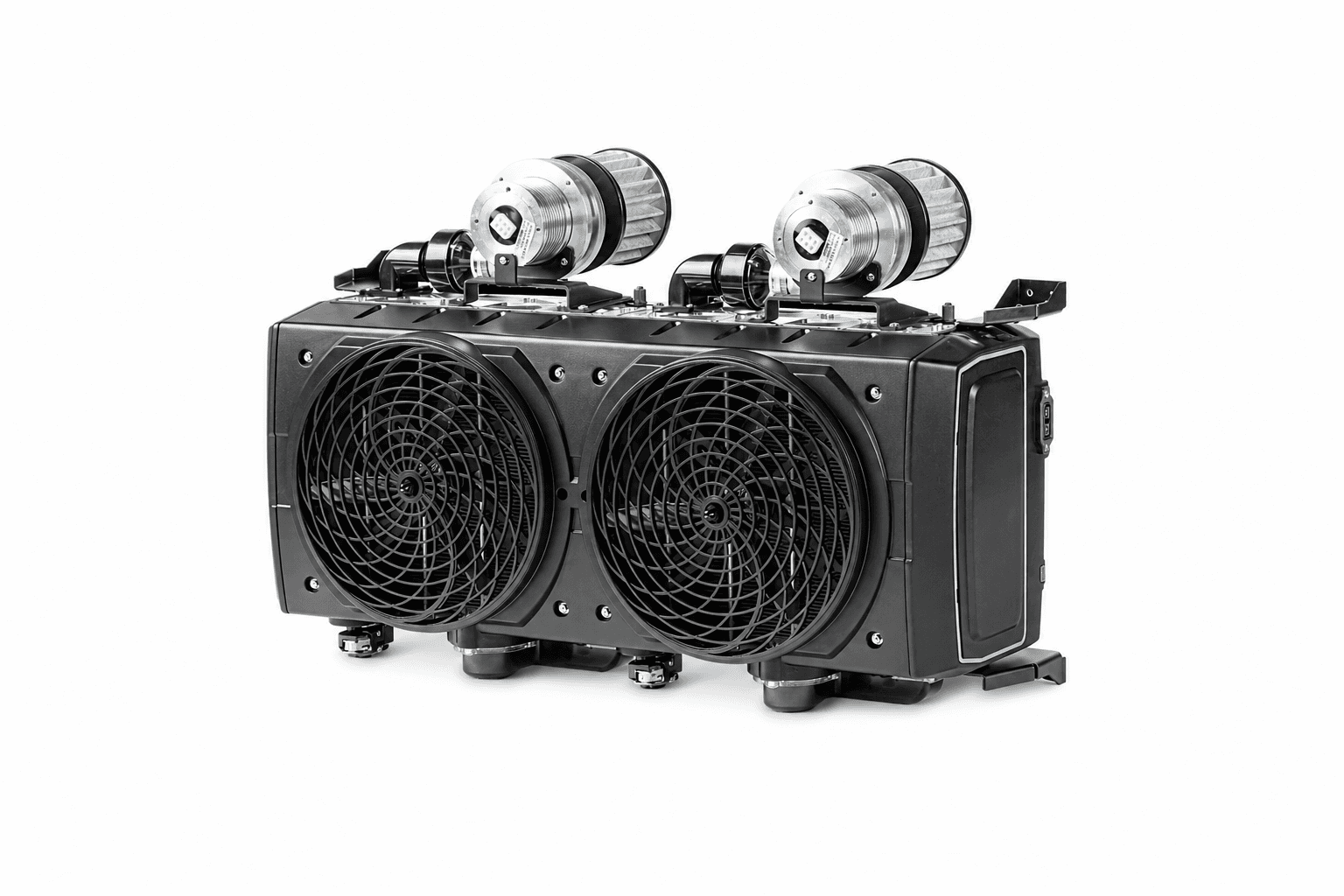
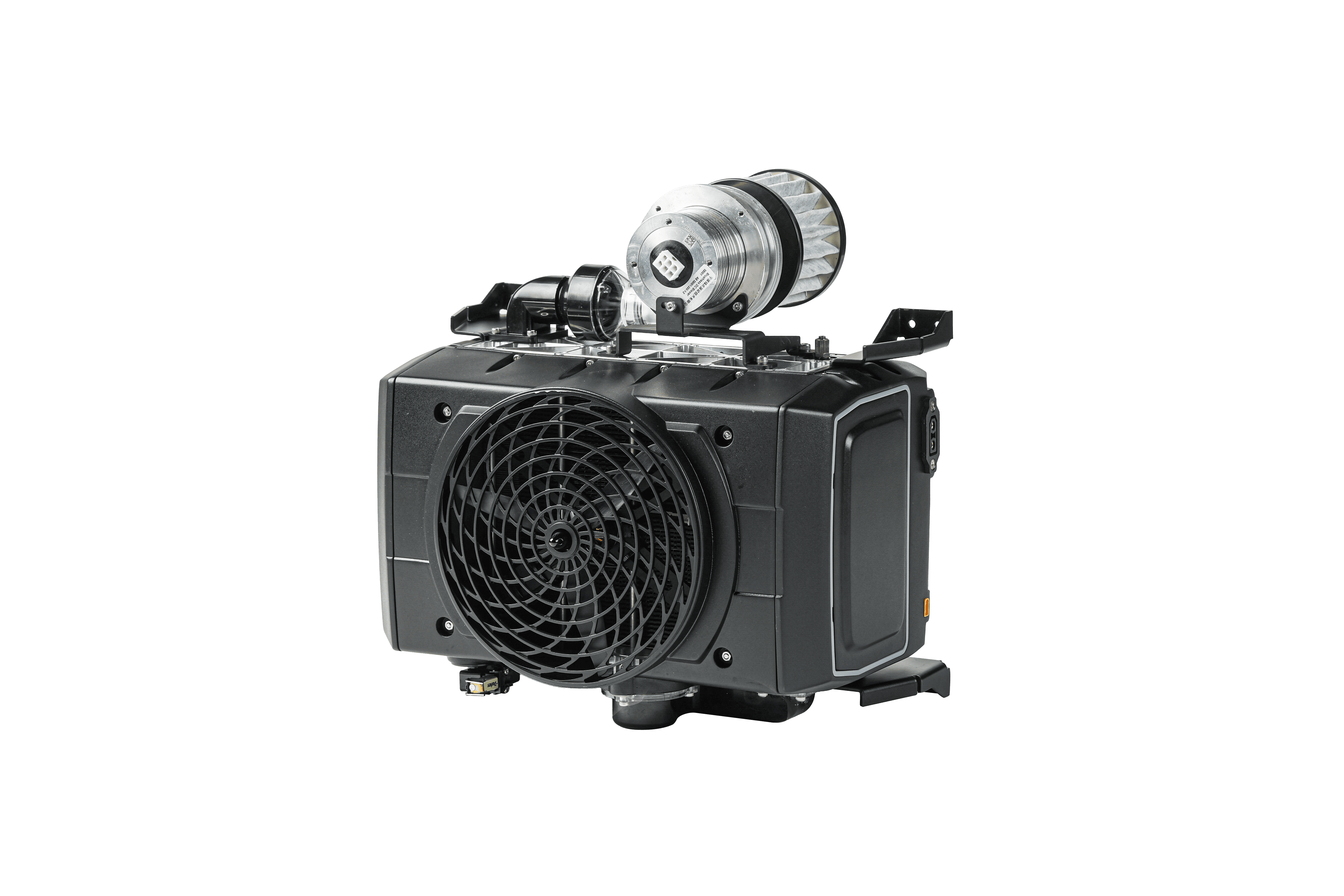
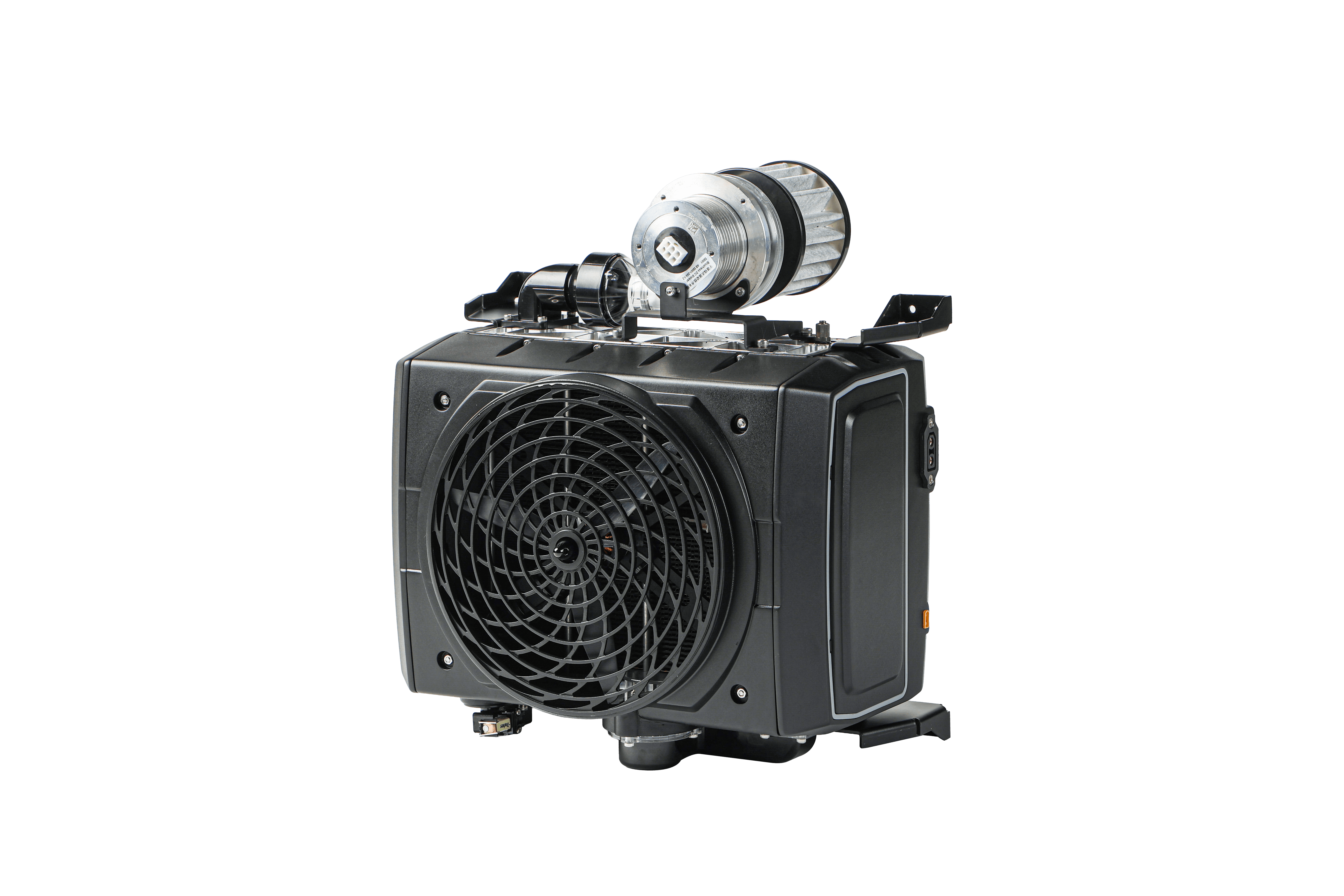
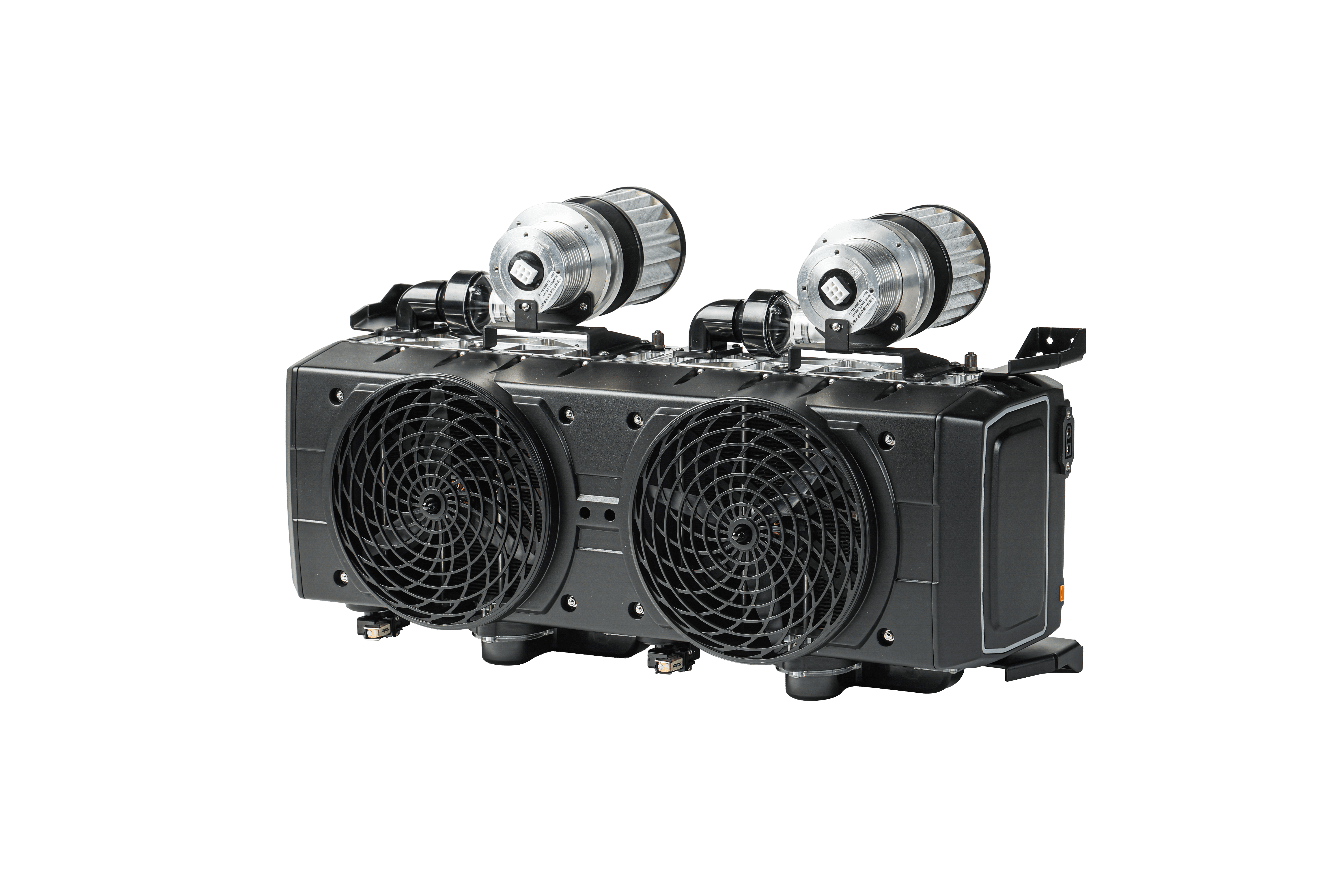
TerraLIX's HYCUS platform addresses high-altitude performance through three coordinated design principles.
Oversized Air Stoichiometry. The system supplies reaction air at 3 to 4 times the theoretical electrochemical requirement — typically 120 to 150 LPM at rated output, scaling up to 200 LPM at peak. This deliberate excess provides a substantial oxygen reserve, ensuring that even when ambient air density drops by nearly half at 6,000 m, sufficient oxygen molecules continue to reach the catalyst layer.
Active Blower-Driven Air Supply. Rather than relying on passive convection, the closed-cathode design integrates an active blower capable of generating 15 to 30 kPa of static pressure. This is 30 to 100 times greater than the system's internal pressure losses (including filtration), giving the fuel cell exceptional headroom to compensate for reduced external air pressure and any incremental losses from filter loading.
Sealed Reaction Chamber. Because the cathode is closed and reaction air is delivered under controlled pressure, the system maintains thermal uniformity, water balance, and membrane hydration regardless of external air conditions — eliminating the unpredictable behavior that open-cathode systems exhibit at altitude.
The combined effect is dramatic. While oxygen partial pressure at 6,000 m is structurally reduced and some performance loss is unavoidable, TerraLIX's design is engineered to maintain approximately 80–90% of rated power output at this altitude — a fundamental improvement over the roughly 50% retention typical of open-cathode alternatives. The remaining 5–10% voltage loss reflects the inherent physics of reduced oxygen partial pressure and increased mass-transport resistance, rather than system-level air supply limitations.